Altimexor Metal Altimexor Metal

How to Reduce Steel Corrosion in Coastal Areas?

Time:2026-09-12 Author:Charlotte
0%

Steel corrodes faster near the sea because salt, moisture, wind, and temperature changes work together. Salt deposits can settle inside bolt joints, welds, drainage gaps, and damaged coating edges. The surface may look intact while corrosion spreads underneath.

The NACE International IMPACT study estimated that corrosion costs the global economy about US$2.5 trillion annually. That figure represented roughly 3.4% of global gross domestic product. The same study indicated that proper corrosion control could save 15–35% of these costs. These figures explain why coastal protection should begin during design, not after rust becomes visible.

So, how to reduce steel corrosion in coastal areas? The answer requires several connected decisions. Engineers should assess salt exposure, humidity, immersion conditions, and maintenance access. ISO 12944-2 provides a useful framework for atmospheric corrosivity, including severe coastal categories such as C5 and CX. In practice, this means selecting a compatible coating system, preparing steel carefully, sealing vulnerable joints, and inspecting damaged areas early. A thin coating over oil, mill scale, or salt will not provide reliable protection. It only delays the problem.

Field experience also shows that drainage design matters. Trapped seawater can turn a small crevice into a deep pit. Yet no single coating works everywhere. Site measurements, exposure history, and realistic maintenance budgets must guide the final specification. This article examines practical methods, common failures, and inspection strategies for longer-lasting coastal steel. Expect useful guidance, but not easy promises.
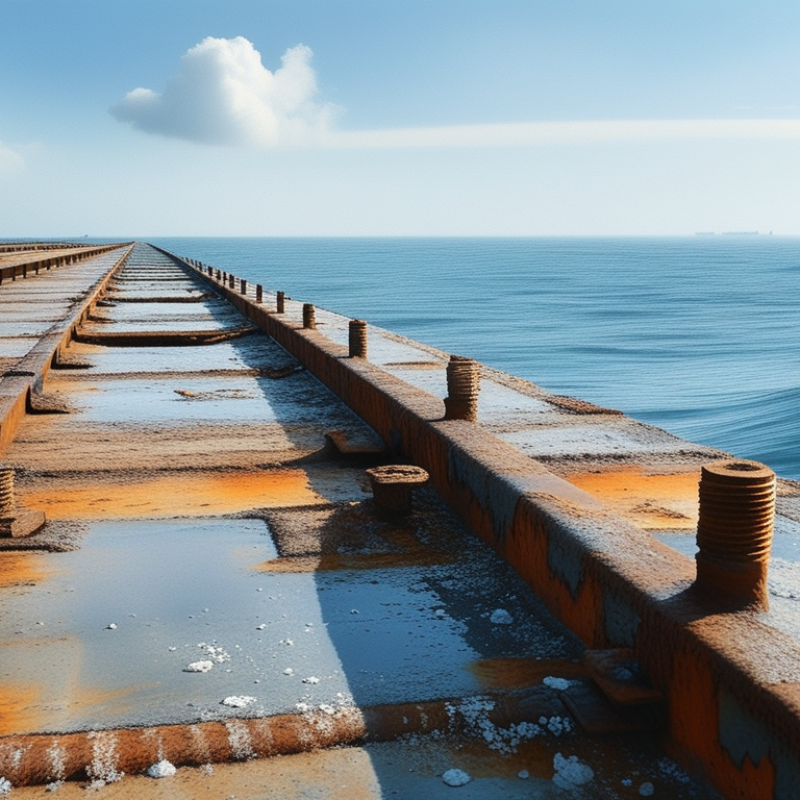
How to Reduce Steel Corrosion in Coastal Areas?

Understanding Why Coastal Conditions Accelerate Steel Corrosion

Coastal conditions accelerate steel corrosion through salt, moisture, and oxygen. Wind carries chloride-rich sea spray onto exposed steel surfaces. Chloride ions break down protective oxide films and support electrochemical corrosion. Humid air keeps surfaces wet, especially during cool nights. Small scratches can then become active corrosion sites.

The NACE IMPACT study estimated global corrosion costs at 2.5 trillion US dollars annually, equal to about 3.4% of global GDP. It also reported that 15% to 35% of corrosion costs could be avoided through better practices.

ISO 9223 classifies coastal atmospheres by corrosivity, considering humidity, salt deposition, and sulfur dioxide. Still, classification is not enough. Real exposure varies between a sheltered balcony and an open pier. Field assumptions often fail.

Tips: Inspect welds, edges, bolts, and drainage points every three to six months. Remove salt deposits with fresh water before they dry into white crusts. Use a suitable coating system, prepare the steel carefully, and repair damaged areas quickly. Design out water traps where possible. Keep records of rust location, coating condition, and weather exposure. No coating plan is perfect. Poor surface preparation can undermine an otherwise strong system. Pay attention to hidden joints; they often corrode before broad steel surfaces.

(Sources: NACE IMPACT Study, 2016; ISO 9223:2012)

Selecting Steel Grades for Marine and Salt-Laden Environments

How to Reduce Steel Corrosion in Coastal Areas?

Selecting Steel Grades for Marine and Salt-Laden Environments

Steel selection near the coast begins with chloride exposure, not appearance. Salt spray enters joints, welds, drainage gaps, and damaged coatings. Carbon steel remains practical for many structures. It needs a well-designed coating system, sealed connections, and regular inspection. Hot-dip zinc protection can improve service life, but it is not permanent in severe splash zones. Crevices may corrode earlier than open surfaces.

For frequently wet components, stainless steel often offers better resistance. Austenitic grades suit many coastal applications, especially where cleaning is possible. Molybdenum-bearing grades perform better against pitting and crevice corrosion. Duplex stainless steel can provide high strength with strong chloride resistance, but fabrication quality matters greatly. Poor weld cleaning can undermine an otherwise suitable grade. I have seen corrosion begin around fasteners, not across the main steel plate.

Weathering steel deserves caution. Its protective patina may not stabilize in constant salt exposure. That assumption can become an expensive mistake. Engineers should match the grade to exposure severity, temperature, stress, maintenance access, and welding requirements. Laboratory data helps, but site conditions often behave differently. A small test panel, inspected through wet and dry seasons, can reveal drainage problems early. Galvanic contact between dissimilar metals also needs control. Isolation washers, compatible fasteners, and rounded details can reduce hidden corrosion.

How to Reduce Steel Corrosion in Coastal Areas? — Selecting Steel Grades for Marine and Salt-Laden Environments
Steel Grade or Material Typical Alloying Characteristics Approximate PREN* Marine and Salt-Laden Exposure Suitability Recommended Applications Main Limitations and Corrosion Controls
Carbon Steel
A36 / S355-Class Structural Steel
Iron-based structural steel with low chromium content; chromium is generally far below the level required for stainless passivation. Not applicable Low without a protective system Structural frames, supports, platforms, and components where coating or cathodic protection can be maintained. Rapid atmospheric corrosion can occur in chloride exposure. Use a suitable marine coating system, sealed joints, drainage, corrosion allowances, inspection access, and cathodic protection where appropriate.
304L Stainless Steel
UNS S30403
Approximately 18% chromium and 8% nickel; low carbon version for improved weld corrosion resistance. Approximately 18 Suitable for sheltered, low-chloride coastal conditions; generally unsuitable for regular seawater wetting. Interior coastal equipment, protected architectural components, and applications with low salt deposition and effective washing. Susceptible to chloride pitting and crevice corrosion. Avoid stagnant seawater, salt deposits, unsealed crevices, and contamination from carbon steel fabrication.
316L Stainless Steel
UNS S31603
Approximately 16–18% chromium, 10–14% nickel, and 2–3% molybdenum; low carbon version. Approximately 24 Good for many atmospheric coastal environments and intermittent salt exposure; not universally resistant to immersion. Coastal handrails, fasteners, architectural hardware, pumps, pipework, and equipment exposed to marine spray when properly designed. Can pit or suffer crevice corrosion in warm, stagnant, or continuously immersed seawater. Use smooth surfaces, good drainage, full-penetration welds where practical, post-weld cleaning, and regular salt removal.
904L Stainless Steel
UNS N08904
High-alloy austenitic stainless steel containing approximately 19–23% chromium, 23–28% nickel, and 4–5% molybdenum, with copper additions. Approximately 35 Very good resistance in severe chloride atmospheres and many acidic service environments; performance still depends on geometry and temperature. Specialized marine process equipment, chemical handling systems, and components requiring higher pitting resistance than 316L. Higher cost and more demanding fabrication than common stainless grades. It is not a substitute for appropriate design in stagnant seawater or severe crevice conditions.
Duplex 2205 Stainless Steel
UNS S32205 / S31803
Approximately 22% chromium, 5% nickel, 3% molybdenum, and 0.14–0.20% nitrogen; mixed austenitic-ferritic microstructure. Approximately 35 Very good for chloride-bearing coastal and marine service, including many structural and process applications. Seawater piping, tanks, heat-exchanger components, offshore structures, desalination equipment, and marine platforms. Welding requires control of heat input and interpass temperature to preserve phase balance and toughness. Avoid prolonged exposure in the approximately 300–550°C range because embrittlement can occur.
Super Duplex 2507 Stainless Steel
UNS S32750
Approximately 25% chromium, 6–8% nickel, 3–5% molybdenum, and 0.24–0.32% nitrogen; high-alloy duplex stainless steel. Approximately 42 Excellent resistance to pitting and crevice corrosion for demanding chloride and seawater service, subject to design and fabrication controls. Seawater systems, offshore production equipment, desalination plants, umbilicals, risers, and high-strength marine components. Requires qualified welding procedures and strict control of heat treatment. Localized corrosion can still occur in deposits, tight crevices, stagnant zones, or under contaminated surfaces.
Titanium Grade 2
UNS R50400
Commercially pure titanium with strong, stable oxide-film protection; alloying additions are very low compared with stainless steels. Not normally expressed using PREN Excellent resistance to natural seawater and marine chloride exposure in many applications. Seawater heat exchangers, desalination equipment, marine piping, and components where long service life justifies higher material cost. Can suffer damage in certain reducing acids, under unfavorable deposits, or through galvanic coupling to less noble metals. Prevent iron contamination and electrically isolate dissimilar metals when required.
Selection note: PREN is an approximate screening indicator calculated from chromium, molybdenum, and nitrogen content; it is not a guarantee of corrosion performance. Actual service life depends on chloride concentration, temperature, wetting and drying cycles, oxygen availability, deposits, crevice geometry, weld quality, surface finish, fabrication contamination, and maintenance. For continuously immersed seawater or critical assets, validate the selection through project specifications, recognized material standards, and application-specific corrosion testing.
Technical basis: Alloy descriptions and indicative PREN values are based on commonly specified compositions for the listed UNS and structural steel grades. PREN is commonly estimated as Cr + 3.3Mo + 16N, with elemental contents expressed as weight percentages.

Designing Structures to Limit Saltwater Exposure and Moisture Traps

How to Reduce Steel Corrosion in Coastal Areas?

Designing Structures to Limit Saltwater Exposure and Moisture Traps

Coastal steel structures fail faster when saltwater settles on hidden surfaces. Good design limits exposure before coatings and maintenance become necessary. Avoid flat ledges, deep recesses, and unsealed overlaps where rainwater can remain. Slight slopes help water drain away from beams, brackets, and connection plates.

Joints deserve careful attention. Tight crevices can trap salt, dust, and condensation for months. Use continuous welds where practical, and seal suitable gaps with tested materials. However, sealed spaces can still hold moisture if water enters during installation. Provide drainage holes at low points, especially inside hollow sections. Small openings matter.

Field inspections often find corrosion beneath clamps, behind stiffeners, and around poorly finished welds. Smooth weld transitions reduce pockets where deposits collect. Keep steel away from direct splash zones when the layout allows it. Raised supports and wider clearances make washing and inspection easier. They also reduce contact with wet concrete and contaminated soil.

No design is perfect. A structure may drain well but still corrode under wind-driven spray. Designers should review local tide levels, prevailing winds, and maintenance access before finalizing details. I have seen clean drawings hide awkward inspection points. That is a useful warning. Specify accessible bolts, visible drainage paths, and inspection records from the beginning. Small design compromises can create large repair costs later.

Applying Protective Coatings and Cathodic Protection Systems

How to Reduce Steel Corrosion in Coastal Areas?

Applying Protective Coatings and Cathodic Protection Systems

Coastal steel faces salt spray, humid air, and repeated wet-dry cycles. Chloride ions can penetrate coating defects and accelerate localized corrosion. The NACE IMPACT study estimated global corrosion costs at 2.5 trillion US dollars annually. It also reported that 15–35% of corrosion costs could be reduced through better prevention practices.

Protective coatings should begin with careful surface preparation. Abrasive cleaning removes rust, mill scale, and embedded salts. Coating systems need suitable primers, intermediate layers, and weather-resistant topcoats. Inspectors should verify dry-film thickness, surface cleanliness, adhesion, and holiday defects. Small flaws matter. ISO 12944 stresses environmental classification and coating durability for corrosive conditions. In practice, edges, welds, bolts, and drainage points often fail before flat steel surfaces.

Cathodic protection adds another safety layer by shifting the steel surface to a protective electrochemical potential. Galvanic anodes can suit smaller structures, while impressed-current systems require controlled power and continuous monitoring. Engineers should follow recognized guidance, including AMPP standards and ISO 12473 principles. Excessive protection can create hydrogen-related risks for certain high-strength steels. That risk is sometimes overlooked. A coating plan may look excellent on paper, yet poor inspection records can undermine it. Rechecking potential readings after storms, repairs, and marine exposure is therefore essential.

Protective coatings create a barrier between steel and seawater, while cathodic protection reduces the steel's electrochemical corrosion potential. The combined system generally provides the lowest corrosion rate, although actual performance depends on coating condition, salinity, temperature, oxygen availability, and maintenance.

Inspecting, Maintaining, and Repairing Coastal Steelwork Step by Step

How to Reduce Steel Corrosion in Coastal Areas?

Coastal steelwork needs a repeatable inspection and maintenance routine. Begin with the splash zone, welds, bolted joints, drainage points, and enclosed crevices. Look for blistered coatings, red rust, staining, loose scale, and trapped seawater. Measure steel thickness with ultrasonic testing when section loss appears possible. A clean-looking surface can mislead. Chloride deposits may remain active beneath apparently sound paint.

The NACE IMPACT study estimated global corrosion costs at about 3.4% of global gross domestic product, or US$2.5 trillion annually. It also reported that 15–35% of corrosion costs could be reduced through effective corrosion management. These figures support planned inspections, not occasional visual checks. Record coating breakdown, salt contamination, surface profile, and dry-film thickness. Wash deposits with fresh water, allow the steel to dry, and repair damaged coating according to the specified preparation standard. Small defects should not wait.

Repairs require engineering judgment. Remove loose corrosion, then verify remaining thickness around pits and welds. Replace weakened sections when calculated capacity is no longer adequate. Improve drainage and seal water-trapping details, but avoid sealing moisture inside the structure. Dissimilar metals may need electrical isolation. Repair records should include photographs, measurements, weather conditions, and materials used. The Federal Highway Administration estimated annual corrosion costs for United States highway bridges at $8.3 billion in its 2002 study. The number is dated, but the lesson remains relevant: neglected details become expensive failures. No inspection plan is perfect. Review missed defects after every maintenance cycle.

FAQS

What should guide steel selection in coastal environments?

Start with chloride exposure, not appearance. Consider wetness, salt spray, temperature, stress, maintenance access, and welding needs. Site conditions may differ from laboratory results.

Can carbon steel be used near the coast?

Yes, carbon steel remains practical for many structures. Use a complete coating system, sealed connections, and regular inspections. Hot-dip zinc protection can extend service life, but severe splash zones still need attention.

Where does coastal corrosion usually begin?

Corrosion often starts at welds, fasteners, joints, drainage gaps, and enclosed crevices. Open steel plates may look sound while hidden areas deteriorate. Small details matter.

When is stainless steel a better choice?

Stainless steel suits components that remain frequently wet. Austenitic grades work well where regular cleaning is possible. Molybdenum-bearing grades usually resist pitting and crevice corrosion better.

What are the advantages and risks of duplex stainless steel?

Duplex stainless steel combines high strength with strong chloride resistance. Its performance depends heavily on fabrication quality. Poor weld cleaning can create early corrosion around the weld.

Is weathering steel reliable in constant salt exposure?

Not always. Its protective patina may fail to stabilize in persistent marine exposure. Assuming otherwise can become an expensive mistake. Test panels can challenge that assumption.

How should coastal steelwork be inspected?

Begin with splash zones, welds, bolted joints, drainage points, and enclosed crevices. Look for blistered paint, red rust, staining, loose scale, and trapped seawater. Clean surfaces can mislead.

What maintenance actions help reduce corrosion?

Wash chloride deposits with fresh water and let the steel dry completely. Repair damaged coatings using the specified preparation method. Do not postpone small defects; they can enlarge beneath paint.

How should weakened coastal steel be repaired?

Remove loose corrosion and measure the remaining thickness around pits and welds. Replace sections when calculated capacity is inadequate. Improve drainage without trapping moisture inside the structure.

How can corrosion risks between different metals be controlled?

Use isolation washers, compatible fasteners, and rounded details where possible. Electrical isolation can reduce galvanic corrosion. Review missed defects after each maintenance cycle. No plan is perfect.

Conclusion

How to reduce steel corrosion in coastal areas begins with understanding the combined effects of salt spray, high humidity, wind, and frequent wet-dry cycles. These conditions allow chloride deposits to remain on steel surfaces and accelerate electrochemical corrosion. Selecting steel grades suited to marine and salt-laden environments can improve durability, while thoughtful structural design helps prevent standing water, narrow moisture traps, and direct exposure to seawater. Proper drainage, ventilation, sealed joints, and accessible surfaces make steelwork easier to protect and maintain.

Long-term protection should combine durable protective coatings with suitable cathodic protection systems where appropriate. Coatings must be applied to clean, prepared surfaces and checked for damage, weak adhesion, or missed areas. Regular inspections should focus on welds, connections, edges, drainage points, and locations where salt or moisture collects. When corrosion is found, the affected area should be cleaned, evaluated, repaired, and recoated promptly. A planned maintenance schedule can extend service life, reduce repair costs, and improve the safety and reliability of coastal steel structures.

Charlotte

Charlotte

Charlotte is a seasoned marketing professional with a deep understanding of the company's portfolio and a passion for elevating its presence in the market. With a keen eye for detail and a commitment to excellence, she ensures that our professional blog is regularly updated with insightful articles......