The global steel market is substantial, valued at over $900 billion in 2021 and projected to reach $1.3 trillion by 2026. Understanding how steel materials are processed in factories is crucial for global buyers. The manufacturing process impacts quality and cost, shaping the supply chain significantly.
Steel processing includes various stages such as casting, rolling, and finishing. Factory environments vary, often impacted by technological advancements and economic factors. Reports indicate that automation can improve efficiency but may complicate labor dynamics. Buyers must recognize not just the product, but the method of its creation.
Challenges persist in the industry. Sustainability concerns and fluctuating raw material prices affect decision-making. Buyers need comprehensive insight into factory operations. This helps in ensuring quality while meeting environmental and economic standards. A deep dive into steel production processes reveals complexities that can influence purchasing strategies.
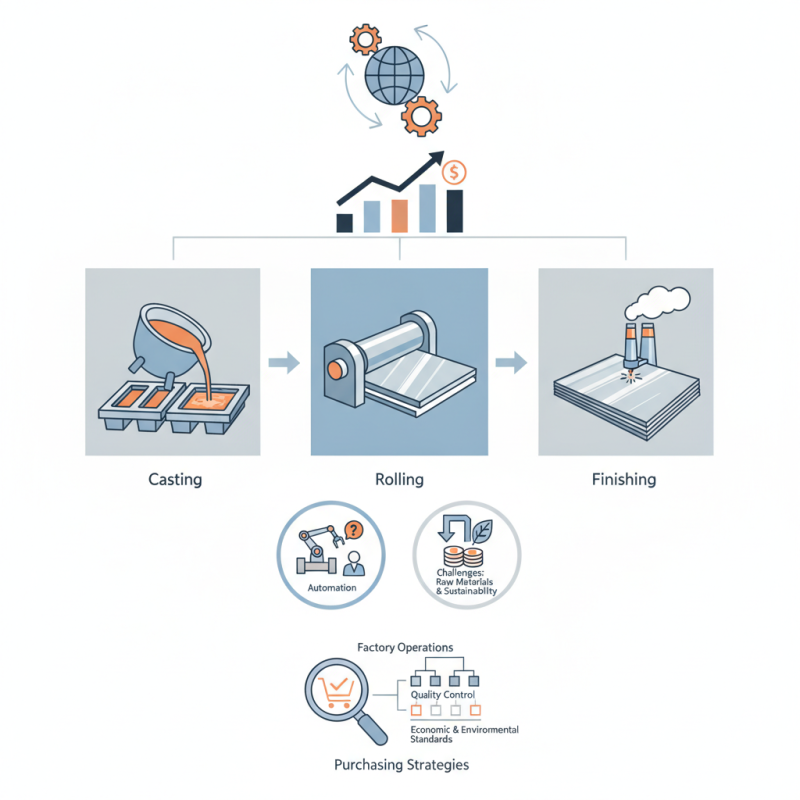
Overview of Steel Processing Techniques in Modern Factories
Steel processing in modern factories involves several advanced techniques. The initial step is often hot rolling, where large steel blocks are heated and shaped. This technique can reduce material thickness by up to 90%, making it essential for structural applications. According to the World Steel Association, over 1.8 billion tons of steel were produced globally in 2022, emphasizing the importance of efficient processing methods.
Another crucial technique is cold rolling. This process enhances surface finish and dimensional accuracy, which is vital for industries like automotive and construction. Cold rolled steel is often less than 2mm thick, yet still remarkably strong. Recent industry reports indicate that the cold rolling market is projected to grow by approximately 5% annually, reflecting rising demand for high-quality steel.
Despite advancements, challenges remain. Waste generation during processing can reach 30% of the raw material in some operations. Factories are increasingly focusing on recycling and waste reduction practices. This push for sustainability is essential, given that steel production accounts for nearly 8% of global CO2 emissions. Continuous reflection on these techniques ensures improvement in both efficiency and environmental impact.
Raw Material Selection and Preparation for Steel Production
Raw material selection is crucial in steel production. High-quality iron ore, scrap steel, and alloying elements determine the final product's durability. Factories assess these materials for their chemical properties and physical characteristics. This assessment ensures that the selected raw materials meet industry standards.
Preparation of these materials involves several steps. Iron ore is typically crushed and concentrated. Scrap steel is sorted and cleaned to remove impurities. After this, alloying elements, like manganese or chromium, are added. These elements enhance strength and corrosion resistance. However, not all materials yield good results, and sometimes impurities still slip through.
The preparation process isn’t perfect. Manufacturers often face challenges with raw material consistency. Variations can affect production efficiency and quality. Regular testing and adjustments are necessary. Balancing cost with quality is a persistent dilemma. This complexity requires expertise and experience in steel production.
Primary Steel Manufacturing Processes: Melting and Alloying
Steel manufacturing begins with melting raw materials. Scrap steel and iron ore are placed in a furnace. The heat reaches extreme temperatures, often exceeding 1,500 degrees Celsius. This intense heat turns solid materials into molten steel. This process does not just create steel; it also removes impurities. The challenge lies in ensuring a uniform quality. Variability can lead to issues later.
After melting, alloying takes place. Different elements are mixed into the molten steel. Common additions include carbon, manganese, and chromium. Each element enhances specific properties. For example, higher carbon content increases hardness. However, balancing these elements is tricky. Too much of one type can weaken the steel. Understanding material science is crucial here.
Factories invest heavily in technology to control these processes. Advanced sensors and software help monitor conditions. Still, human oversight remains vital. Skilled professionals must analyze results continuously. There are always risks involved. Small errors can lead to significant quality issues. Continuous improvement is essential. Learning from past mistakes fosters better practices for future production.
Forming and Shaping Steel: Rolling, Forging, and Extrusion Methods
Steel processing in factories is a critical step in the supply chain for global buyers. The methods of forming and shaping steel play a vital role in determining the quality of the final product. Among the most widely used techniques are rolling, forging, and extrusion.
Rolling is a process that involves passing steel through rollers to reduce its thickness. This method produces sheets or plates that are essential for many applications. During rolling, the steel must reach specific temperatures. If the temperature is not precise, defects can occur. Forging, on the other hand, uses compressive forces to shape steel into desired forms. This method enhances the material's strength and durability. However, it requires skilled operators to ensure consistency and quality.
Extrusion involves pushing heated steel through a die to create long shapes, such as bars or tubes. This method allows for complex profiles that are hard to achieve with other processes. Yet, it can be challenging to control the cooling rate, which can lead to variations in material properties. Each of these methods has its advantages and drawbacks, highlighting the importance of careful monitoring throughout the manufacturing process. This ensures that the steel meets the rigorous standards expected by buyers worldwide.
How Steel Materials Are Processed in Factories for Global Buyers
Quality Control Measures in Steel Manufacturing for Global Trade
Quality control is paramount in steel manufacturing. Factories implement rigorous measures to ensure high standards. Each batch undergoes testing for strength, ductility, and composition. These tests confirm that the steel meets international specifications. Global buyers rely on these standards to ensure their materials are reliable and safe.
Tips: Regular audits of production processes can catch issues early. Employing technology for precise measurements enhances quality control. Collaboration with skilled metallurgists can also lead to better outcomes.
Furthermore, factories must adopt a culture of continuous improvement. Feedback loops from clients are essential. Mistakes happen, but learning from them is critical. Steel specifications can vary, so local standards should also be understood. Manufacturers must adapt to different requirements in various regions.
Tips: Engage with local experts for insight. Documenting lessons learned can prevent future errors. Training staff on quality control challenges fosters a proactive workforce.
FAQS
: Raw material selection affects the final product's durability and quality.
Iron ore, scrap steel, and alloying elements are commonly used.
It is crushed and concentrated to enhance its quality.
They often deal with consistency issues and impurities may remain.
It ensures each batch meets strength and composition standards.
Regular testing, audits, and using technology improve quality assurance.
Engaging local experts and fostering a culture of continuous improvement helps.
They help identify mistakes and drive necessary improvements.
Different regions have varying standards that manufacturers must adapt to.
Training helps develop a proactive workforce that can tackle challenges effectively.
Conclusion
The article explores how steel materials are processed in factories to meet the demands of global buyers. It begins with an overview of modern steel processing techniques, highlighting the significance of raw material selection and preparation in the production process. The core manufacturing processes, including melting and alloying, are essential for creating high-quality steel suitable for various applications.
Further, the article delves into the methods of forming and shaping steel, such as rolling, forging, and extrusion, which are pivotal in transforming raw materials into final products. Throughout the manufacturing process, stringent quality control measures are implemented to ensure that the steel meets international standards, thus guaranteeing its reliability and performance for global trade. This comprehensive approach enables factories to produce steel that fulfills the diverse needs of buyers worldwide.
 Altimexor Metal

%20Metal%20Products%20Co.%2C%20Ltd._Steel%20Pipe%2CSteel%20Plate&images=https%253A%252F%252Fomo-oss-image.thefastimg.com%252Fportal-saas%252Fpg2025102019471928898%252Fcms%252Fimage%252F048d5311-fbf7-4e5e-8816-c4626d2ac3bf.png_1920xaf.png&summary=)