Altimexor Metal Altimexor Metal

What Makes Steel Strong in Construction for Global Buyers?

Time:2026-05-01 Author:Mason
0%

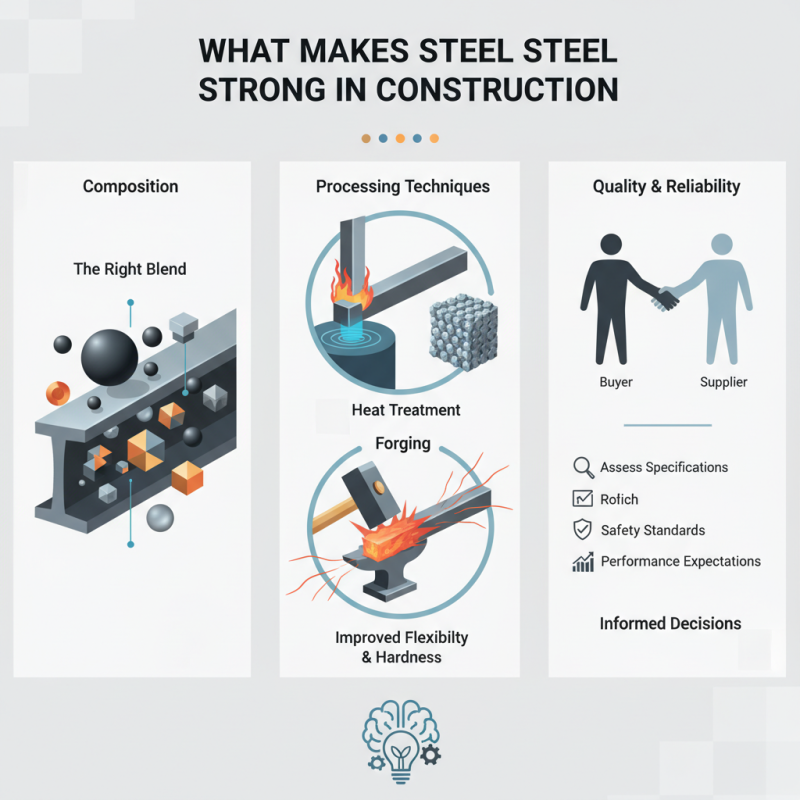
In the realm of construction, understanding what makes steel strong is crucial for global buyers. Steel's strength stems from various factors, including its composition, processing, and treatment methods. The right blend of materials, such as iron, carbon, and alloying elements, significantly influences its durability and load-bearing capacity.

Moreover, the production techniques, like heat treatment and forging, enhance its structural integrity. These processes can refine the steel's grain structure, resulting in improved strength and flexibility. For instance, quenched and tempered steel exhibits superior hardness and resilience. However, not all steel is created equal; variations in quality can lead to performance discrepancies in construction projects.

Buyers must assess the reliability of their steel suppliers and understand specifications. Knowing what makes steel strong in construction helps ensure that projects meet safety standards and performance expectations. Ultimately, informed decisions hinge on a blend of experience, expertise, and awareness of potential pitfalls in material selection.
What Makes Steel Strong in Construction for Global Buyers?

What Are the Key Properties of Steel Used in Construction?

Steel possesses several key properties that make it ideal for construction. Its high tensile strength allows it to withstand heavy loads. This strength is essential in buildings and bridges. Steel's ductility means it can deform without breaking. This is crucial during events like earthquakes, as it can absorb energy and prevent catastrophic failure.

Corrosion resistance is another important property. Steel can degrade over time due to moisture and chemicals. However, modern treatments and coatings can enhance its durability. Buyers need to consider these factors when selecting steel for their projects.

Moreover, the material's thermal conductivity plays a role in temperature regulation within structures. Steel can transfer heat efficiently, impacting energy use. Not all steel is created equal, and variations exist. Understanding these properties helps buyers make informed decisions. It’s not just about choosing steel; it’s about selecting the right type for specific needs.

The Role of Alloying Elements in Enhancing Steel Strength

Alloying elements play a crucial role in enhancing the strength of steel used in construction. Elements such as carbon, manganese, and chromium significantly contribute to the mechanical properties of steel. For instance, increasing carbon content can boost steel's hardness. Studies have shown that steels with up to 0.8% carbon exhibit notable improvements in tensile strength, sometimes exceeding 600 MPa.

Manganese also serves a vital purpose. It helps in grain refinement, ensuring the steel maintains toughness even under high-stress conditions. According to a recent industry report, steel with at least 1% manganese demonstrates a 20% increase in yield strength. This is essential in structural applications, where failure can result in catastrophic consequences.

Beyond these common elements, new alloys are emerging. Research indicates that adding nickel improves impact toughness at low temperatures. Some advanced steels now feature controlled amounts of alloying agents, allowing for tailored properties. However, the balance of these elements can be tricky. Too much of a good thing can lead to brittleness and decreased ductility, which need careful consideration during material selection.

What Makes Steel Strong in Construction for Global Buyers?

Alloying Element Typical Percentage by Weight (%) Primary Benefits
Carbon (C) 0.2 - 2.0 Increases strength and hardness, improves wear resistance
Manganese (Mn) 0.5 - 1.5 Enhances tensile strength, improves hardenability
Chromium (Cr) 0.5 - 2.5 Increases corrosion resistance, improves toughness
Nickel (Ni) 0.5 - 3.0 Enhances toughness, improves corrosion resistance
Molybdenum (Mo) 0.1 - 0.5 Improves strength at high temperatures, enhances hardenability
Vanadium (V) 0.1 - 0.5 Increases strength and toughness, refines grain structure
Titanium (Ti) 0.05 - 0.5 Improves strength, fine grain size allows better toughness

Impact of Steel Grades on Structural Integrity and Performance

When it comes to construction, the strength of steel is paramount. Different grades of steel offer various properties that significantly impact structural integrity. For example, structural steel grades like S275 and S355 are widely used due to their yield strength and ductility. The S275 grade has a yield strength of 275 MPa, suitable for general construction, while S355, with 355 MPa, is preferred for heavy-duty structures.

The choice of steel grades can affect not just strength but also performance under stress. A study from the American Institute of Steel Construction (AISC) indicated that using higher-grade steel enhances resistance to deformation and failure. However, these advantages come with increased costs and may require more precise construction techniques. Not all projects can justify the premium pricing of higher-grade steel, leading to a common oversight in material selection.

Moreover, the impact of steel grade is not always straightforward. While higher grades improve load-bearing capacity, they can also complicate fabrication processes. This highlights the balance required in selecting the right material—forging a compromise between strength, practicality, and cost-effectiveness. Making informed decisions based on these factors is crucial for optimizing structural designs in construction projects.

Global Trends in Steel Production and Their Impact on Construction

Steel production has seen significant shifts in recent years. Emerging trends affect its quality and availability. Recycling efforts have surged, allowing steelmakers to use scrap metal. This not only reduces waste but also enhances the strength of steel. Constructing sustainable structures relies on high-quality materials. Steel's inherent properties meet this demand.


Globalization plays a role in shaping steel supply chains. Regional differences often lead to price fluctuations and availability issues. Countries with robust production capabilities gain competitive advantages. However, not all steel is created equal. Variations in production methods can impact structural integrity.


The rise of innovative techniques offers promise but poses challenges. New alloys and treatments enhance performance, yet their cost can deter widespread use. As construction demands grow, so does the need for reliable and strong materials. Thus, the industry must adapt to these trends while prioritizing quality and safety. Failure to do so could compromise project outcomes.

Sustainability Considerations in Steel Manufacturing for Construction

Sustainability is a pressing consideration in steel manufacturing for construction. The steel industry is responsible for about 8% of global greenhouse gas emissions. This statistic highlights the urgent need for change. Efforts to reduce emissions are vital for a sustainable future. Companies are exploring ways to implement cleaner production methods.

Recycling is one answer. Approximately 70% of steel is recycled annually. This reduces waste and energy consumption. Using recycled steel can lower energy use by up to 74%. However, the industry must do more. Innovative methods are necessary to further cut carbon footprints. Transitioning to renewable energy sources in steel production is an area ripe for improvement.

Supply chain considerations also play a role. Transparency in sourcing materials is crucial. Buyers are increasingly focused on sustainable practices. Reports indicate that 70% of consumers are willing to pay more for eco-friendly materials. The industry needs to reflect on this shift. Meeting buyers' expectations demands a commitment to sustainability at every step.

Strength Factors in Construction Steel

This bar chart illustrates key strength factors in construction steel, including tensile strength, yield strength, ductility, and corrosion resistance, which are critical for sustainability considerations in the steel manufacturing process.

FAQS

: What trends are influencing steel production today?

: Significant shifts include increased recycling and the use of scrap metal. These changes enhance steel quality and reduce waste.

How does globalization affect steel supply chains?

Globalization leads to regional price fluctuations and availability issues. Some countries benefit from strong production capabilities.

Why is sustainability important in steel manufacturing?

The steel industry contributes to 8% of global greenhouse gas emissions. Reducing these emissions is crucial for our planet's health.

How much steel is recycled annually?

Approximately 70% of steel is recycled each year. This practice greatly lowers energy use and waste generation.

What challenges come with new steel production techniques?

Innovative alloys and treatments improve performance but can be costly. This might limit their widespread adoption in construction.

How can companies enhance the sustainability of steel production?

Transitioning to renewable energy sources is essential. Innovations in production methods can significantly cut carbon footprints.

Are consumers willing to pay more for eco-friendly materials?

Yes, about 70% of consumers prefer sustainable materials and are willing to spend more for them.

What role does transparency play in sourcing materials?

Increased transparency is necessary. Buyers are focused on sustainable practices and expect companies to adhere to them.

How does the quality of steel affect construction?

Variations in production methods can impact structural integrity. High-quality materials are vital for safe and reliable construction.

What happens if the industry fails to prioritize quality and safety?

Failing to do so may compromise project outcomes. This demands reflection and a serious commitment to improvement.

Conclusion

The article "What Makes Steel Strong in Construction for Global Buyers?" delves into the essential properties of steel that contribute to its strength and durability in construction applications. Key factors include its tensile strength, ductility, and resistance to corrosion, all of which are crucial for structural integrity. Additionally, the role of alloying elements is highlighted, demonstrating how elements like chromium and nickel enhance steel's overall performance.

Furthermore, the article discusses the significance of various steel grades and their impact on structural performance, emphasizing that higher grades often translate to better strength and longevity. Global trends in steel production are examined, showcasing how shifts in supply and demand influence construction practices. Finally, the report considers sustainability in steel manufacturing, underscoring the industry's commitment to reducing environmental impact while maintaining the qualities that define what makes steel strong in construction.

Mason

Mason

Mason is a seasoned marketing professional with a deep expertise in the company's offerings and a passion for driving brand awareness. With a strong background in digital marketing strategies, he has an innate ability to connect with diverse audiences and effectively communicate product benefits.......