Altimexor Metal Altimexor Metal

Why Do Different Steel Types Have Different Lifespans?

Time:2026-09-07 Author:Amelia
0%

Steel rarely fails because of age alone. Its lifespan depends on chemistry, manufacturing quality, surface protection, loading, moisture, and maintenance. A carbon steel beam may remain strong indoors for decades, yet rust quickly beside a salty road. Stainless steel often resists corrosion longer, but it can still stain or pit in chloride-rich water. Galvanized steel gains protection from its zinc coating, although scratches and trapped moisture can expose the underlying metal.

What is the lifespan of different steel types? There is no single answer. Mild steel may last 15 to 30 years outdoors without proper protection, while painted or galvanized steel can serve for 40 years or more. Stainless steel can exceed 50 years in suitable conditions. Weathering steel may develop a protective oxide layer, but poor drainage can interrupt that process. Tool steel usually lasts much longer when temperature, abrasion, and impact remain controlled.

Details matter. A bridge joint holding road salt needs closer inspection than a dry warehouse column. Engineers examine rust depth, coating loss, cracks, weld quality, and repeated stress. Industry standards provide useful guidance, but site evidence remains essential. Small design errors can shorten a lifetime dramatically. That estimate is imperfect. Climate change, neglected maintenance, and unexpected chemical exposure can alter results. A reliable assessment combines material records, inspection history, environmental data, and practical engineering judgment. Steel lasts longest when its weaknesses are understood before they become visible damage.
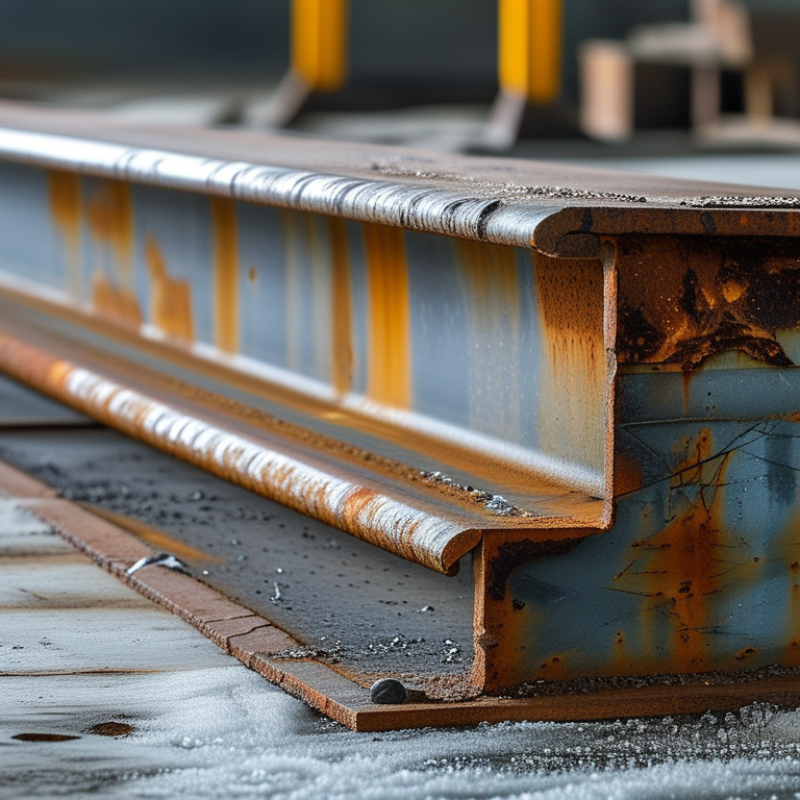
Why Do Different Steel Types Have Different Lifespans?

What Steel Lifespan Means and How It Is Measured

Steel lifespan is not a single number. It usually means the period before corrosion, fatigue, or deformation reduces safety or usefulness. Design life is an engineering target. Service life is what the structure actually achieves.

Engineers measure lifespan through evidence, not appearance alone. Ultrasonic thickness testing checks hidden metal loss. Inspectors also record rust depth, coating damage, weld cracks, and drainage problems. ISO 9223:2012 classifies atmospheric corrosion from C1 to CX. Carbon steel in the highest CX category may lose more than 200 micrometres during its first year. One millimetre can disappear surprisingly quickly. However, corrosion rates change with moisture, salt, temperature, and maintenance.

The NACE IMPACT study estimated annual global corrosion costs at US$2.5 trillion, equal to about 3.4% of global GDP. That figure shows why lifespan measurement matters financially. For bridges, fatigue assessments count stress cycles and examine crack growth. Load testing can reveal remaining capacity, but it cannot predict every future exposure. A painted beam may look healthy while corrosion develops beneath a damaged joint. That boundary is not always clean. Reports can also contain uncertainty when inspection intervals are long or records are incomplete. A more reliable estimate combines thickness readings, environmental data, repair history, and conservative engineering models. Sometimes, the honest answer is less precise.

Why Do Different Steel Types Have Different Lifespans?

Estimated time to reach 1 mm of uniform corrosion loss under typical atmospheric exposure

Service life depends on corrosion rate, exposure conditions, design, maintenance, and protective systems. These indicative values use representative atmospheric corrosion rates and show why weathering, galvanized, and stainless steels generally last longer than unprotected carbon steel. Localized pitting, crevice corrosion, welds, salt, moisture, and industrial pollutants can significantly shorten actual service life.

How Alloy Composition Changes Steel’s Resistance to Damage

Why Do Different Steel Types Have Different Lifespans?

Steel does not wear out at one fixed speed. Its lifespan changes with alloy composition, heat treatment, load, and surroundings. Carbon is a key factor. More carbon can increase hardness, but excessive hardness may reduce toughness. A cracked cutting edge shows this trade-off clearly.

Chromium helps steel form a thin, protective oxide layer. That layer can slow rust in damp air or mild chemical exposure. Nickel improves toughness and supports corrosion resistance. Molybdenum can strengthen steel against pitting, especially where salt is present. Manganese improves hardenability, while silicon supports strength and elasticity. These elements work together, not separately.

The internal structure matters just as much. Proper heat treatment can create a balanced mix of strength and toughness. Poor cooling may leave brittle zones or unwanted residual stress. In workshop inspections, two similar steel parts can show different damage after the same service period. One may have smooth wear marks. The other may show deep pits around a rough weld. Surface finish, temperature changes, and repeated impact often explain the difference.

A simple ranking is tempting, but it can mislead. The hardest steel is not always the longest-lasting choice. Engineers should match composition and treatment to the actual failure risk. Testing under realistic loads remains essential. Even careful material selection cannot remove every uncertainty.

How Manufacturing Processes Shape Steel’s Internal Structure

Why Do Different Steel Types Have Different Lifespans?

How Manufacturing Processes Shape Steel’s Internal Structure

Steel’s lifespan begins before it enters a bridge, vehicle, or machine. Manufacturing changes its internal structure, not only its shape. During rolling, grains may elongate, while inclusions can align with future stress paths. Controlled reheating can refine grains and improve toughness. Quenching creates hard martensite, while tempering reduces brittleness through reheating. Small temperature errors matter. This is why similar steel grades can age differently.

Carbon content, alloy additions, cooling rate, and residual stress all influence performance. Uneven cooling may leave tensile stress near a weld or thick corner. That hidden stress can accelerate fatigue and corrosion. The World Steel Association reported approximately 1.89 billion tonnes of crude steel production in 2023. Such volume makes process consistency a major reliability issue. Process history matters.

The IMPACT corrosion study estimated global corrosion costs at 3.4% of global gross domestic product. It also suggested that 15–35% of these costs could be reduced through better practices. A mill certificate helps, but it cannot reveal every local defect. Metallography, hardness mapping, and ultrasonic testing provide stronger evidence. A stronger steel is not automatically a longer-lived steel. Designers sometimes overvalue tensile strength and overlook toughness, residual stress, or coating damage. That assumption deserves review. Field loading is rarely as tidy as a laboratory test.

Why Do Different Steel Types Have Different Lifespans? - How Manufacturing Processes Shape Steel’s Internal Structure

Steel Type Typical Manufacturing Route Internal Structure Created Main Durability Advantage Indicative Service Life* Important Limitation
Plain Carbon Steel Basic oxygen or electric-arc steelmaking, followed by hot rolling and controlled cooling. Ferrite–pearlite structure; higher carbon generally increases pearlite and strength but reduces ductility. Good strength, weldability, availability, and low cost when protected by paint or coatings. 50+ years for well-maintained structures; exposed unprotected surfaces may require repair much earlier. Rusts readily in moisture, salts, and acidic environments. Protective coatings require inspection and renewal.
Weathering Steel Low-alloy steelmaking with small additions of copper, chromium, nickel, or phosphorus, followed by controlled rolling. Low-alloy ferrite–pearlite matrix that develops a relatively stable, adherent oxide patina under suitable wet–dry cycling. Patina can slow further atmospheric corrosion and reduce the need for conventional painting. 50–100 years is possible in suitable inland or rural atmospheres with proper detailing. Performs poorly where chloride deposits, constant wetness, crevices, or poor drainage prevent patina stabilization.
Hot-Dip Galvanized Steel Low-carbon steel is cleaned, fluxed, and immersed in molten zinc, producing bonded zinc–iron alloy layers and an outer zinc layer. Metallurgically bonded coating with sacrificial zinc protection; the steel substrate usually remains ferrite–pearlite. Zinc protects exposed steel electrochemically and provides a durable barrier against atmospheric corrosion. 15–70 years for the zinc coating, depending strongly on atmospheric corrosivity and coating thickness. Rapid zinc consumption occurs in marine, industrial, acidic, or alkaline conditions; cut edges and damaged areas need attention.
Stainless Steel 304 Solution annealing and controlled cooling of chromium–nickel austenitic steel, typically followed by pickling or passivation. Stable austenitic structure with at least approximately 10.5% chromium, enabling formation of a thin passive chromium-oxide film. High general corrosion resistance, good toughness, and excellent formability in many indoor and outdoor atmospheres. 50+ years in many architectural and indoor applications when correctly specified and maintained. Susceptible to chloride-induced pitting and crevice corrosion, especially near seawater, deicing salts, and stagnant deposits.
Stainless Steel 316 Solution-annealed austenitic stainless steel with molybdenum added to improve localized corrosion resistance. Austenitic matrix with a chromium-rich passive film; molybdenum improves resistance to chloride pitting and crevice attack. Better resistance than 304 in marine, coastal, chemical, and salt-contaminated environments. 50+ years is commonly achievable when the environment, surface finish, and detailing are appropriate. Not immune to corrosion; severe chloride exposure, heat contamination, or trapped deposits can still cause localized attack.
Quenched-and-Tempered Alloy Steel Alloying, austenitizing, rapid quenching, and tempering to obtain a controlled balance of hardness, strength, and toughness. Tempered martensite, often with fine alloy carbides, producing high strength and improved resistance to wear and fatigue. High tensile strength and strong resistance to mechanical wear when heat treatment is properly controlled. 106–107 fatigue cycles can be achievable in suitable designs; actual life depends on stress and maintenance. High hardness can reduce weldability and increase susceptibility to hydrogen cracking, brittle fracture, or stress concentration.
Dual-Phase Automotive Steel Cold rolling followed by intercritical annealing and controlled cooling to form two distinct phases. Soft ferrite matrix containing hard martensite islands, combining high strength with useful uniform elongation. Excellent strength-to-weight ratio and energy absorption for formed components. 15–25 years is typical for vehicle body applications, depending on corrosion protection and operating climate. Service life is strongly affected by paint systems, galvanizing, road salt, trapped moisture, and cyclic deformation.
Cast Iron Molten iron is cast into molds; composition and cooling rate control graphite shape and matrix formation. Graphite flakes in gray iron or graphite nodules in ductile iron, embedded in ferritic, pearlitic, or mixed matrices. Excellent compressive strength, vibration damping, castability, and wear performance in suitable applications. 30–100 years in stable, protected service; underground or water-contact performance varies considerably. Graphite morphology can reduce tensile toughness; gray iron is more vulnerable to cracking under impact or thermal shock.
Note: Service-life values are indicative engineering ranges rather than guarantees. Actual lifespan depends on steel chemistry, section thickness, heat treatment, weld quality, surface condition, load cycles, temperature, humidity, chloride exposure, drainage, coating maintenance, and inspection practices. Manufacturing processes influence grain size, phase distribution, residual stress, inclusions, and surface condition, all of which affect corrosion resistance, fatigue strength, toughness, and long-term durability.

How Environment and Maintenance Accelerate or Extend Steel Aging

Why Do Different Steel Types Have Different Lifespans?

Steel aging rarely follows a fixed calendar. Moisture, salts, temperature changes, and pollutants can alter corrosion rates within weeks. A sheltered beam may remain stable for decades, while a coastal connection develops rust around a bolt within one season. ISO 9223 classifies atmospheric environments by corrosivity, including chloride exposure and humidity. These details matter more than steel grade alone.

The NACE IMPACT study estimated global corrosion costs at about 2.5 trillion US dollars annually, equal to nearly 3.4% of global economic output. It also reported that 15–35% of corrosion costs could be avoided through better prevention and management. Protective coatings, sealed joints, drainage, and regular inspections slow aging. They do not stop it. Tiny coating blisters often hide deeper metal loss. Maintenance teams should measure thickness, inspect crevices, and record changes after storms or chemical exposure.

Poor maintenance accelerates failure. A blocked drain can leave brown water standing against a column base. Salt deposits may look harmless, but they attract moisture and damage protective films. Field inspections often reveal this gap between design assumptions and actual conditions. Still, inspection intervals are not perfect. They should be adjusted when climate, pollution, loading, or operating practices change. A steel component’s lifespan is therefore a moving estimate, shaped by its environment and the care it receives.

How Engineers Match Steel Types to Long-Term Applications

Steel does not have one universal lifespan. Engineers match each type to its environment, loads, temperature, and maintenance plan. Carbon steel may suit protected indoor frames, but moisture can quickly expose weak points. Stainless steel resists many corrosive settings, while alloy steels often handle higher stress or heat. The choice also depends on weld quality, surface preparation, and expected movement. A strong material can still fail when water collects inside a joint.

Tips: Check the exposure before choosing the grade. Salt air, chemicals, trapped moisture, and repeated vibration need different solutions. Review corrosion allowances, coating systems, inspection access, and repair schedules. Small details matter. A drainage hole can extend service life more effectively than a thicker section.

Engineers use test data, design codes, site history, and inspection records to estimate long-term performance. They also consider how the steel will be cut, formed, welded, and maintained. A material that performs well in a laboratory may behave differently beside a busy road or cooling tower. Durability estimates are useful, but never perfect. Field inspections often reveal overlooked issues, such as crevice corrosion beneath a loose connection. Revising the design after these findings is not failure. It is responsible engineering.

FAQS

: What does steel lifespan actually mean?

: It means the period before corrosion, fatigue, or deformation reduces safety or usefulness. Design life is a target. Service life is the real outcome.

How do engineers measure steel lifespan?

They combine thickness readings, rust depth, coating damage, weld inspections, and repair records. Ultrasonic testing can detect hidden metal loss. Appearance alone can mislead.

Which conditions shorten steel’s service life?

Moisture, salt, chemicals, temperature changes, and repeated vibration can accelerate damage. Water trapped inside a joint is especially harmful. Small details matter.

Can a painted steel beam still corrode?

Yes. Corrosion may develop beneath damaged paint, especially near joints and welds. A smooth surface proves little. Inspect the boundaries carefully.

How does alloy composition affect durability?

Chromium can form a protective oxide layer. Nickel improves toughness and corrosion resistance. Molybdenum helps resist salt-related pitting. Carbon increases hardness, but excessive hardness may reduce toughness.

Is the hardest steel always the longest-lasting choice?

No. High hardness can make steel more vulnerable to cracking under impact. A balanced structure may perform better. Harder is not always better.

How should engineers choose steel for long-term applications?

They consider exposure, loads, temperature, movement, welding, surface preparation, and maintenance access. Indoor carbon steel may work well in dry conditions. Salt air requires stronger protection.

Can maintenance extend steel’s service life?

Yes. Removing trapped water, repairing coatings, and checking welds can slow deterioration. A drainage hole may help more than extra thickness. Maintenance is not optional.

Can engineers predict steel lifespan exactly?

No. Estimates depend on inspection quality, environmental records, and future exposure. A load test cannot predict every condition. Sometimes, the honest answer is less precise.

Conclusion

Steel lifespan refers to how long a steel product can perform safely and reliably before corrosion, fatigue, wear, cracking, or deformation makes it unsuitable for service. What is the lifespan of different steel types depends on how lifespan is measured, including strength retention, surface condition, structural safety, and resistance to repeated loading. Alloy composition plays a major role: elements such as chromium, nickel, molybdenum, and carbon can improve corrosion resistance, hardness, toughness, or high-temperature performance, although these benefits often involve trade-offs.

Manufacturing processes also influence grain structure, internal stresses, and defect levels, which can strongly affect durability. In real applications, moisture, chemicals, temperature changes, abrasion, and poor maintenance may accelerate aging, while protective coatings, inspections, proper cleaning, and timely repairs can extend service life. Engineers therefore select steel according to the expected environment, load, temperature, maintenance plan, and required reliability, matching each steel type to its long-term purpose rather than judging durability by composition alone.

Amelia

Amelia

Amelia is a seasoned marketing professional with a wealth of expertise in our company’s core offerings. With an unwavering passion for driving growth and innovation, she plays a pivotal role in shaping our marketing strategies and enhancing brand visibility. A key aspect of her responsibilities......