 Altimexor Metal
Altimexor Metal
Altimexor Metal
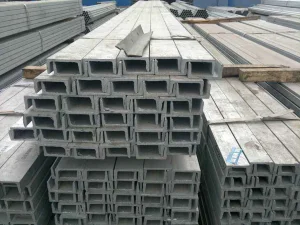
Standard structural profiles optimized for immediate deployment in Swakopmund, Windhoek, and Walvis Bay logistics zones.
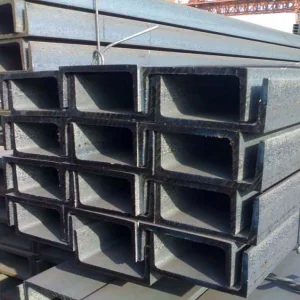
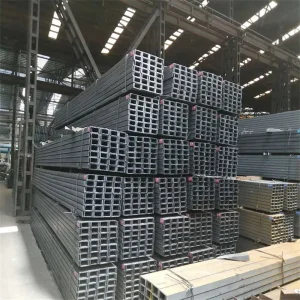
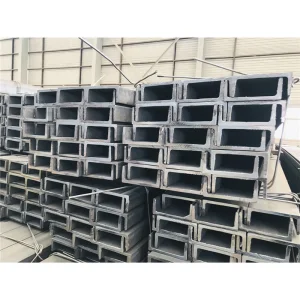
Namibia's industrial development is entering a transformative era. Supported by strategic national initiatives such as the Harambee Prosperity Plan II and the National Development Plans (NDP5), the demand for high-strength, durable structural steel has reached record levels. Key sectors driving this growth include the Walvis Bay Port Corridor development, offshore diamond extraction, inland uranium processing plants (such as the Husab and Rössing operations), and the emerging green hydrogen infrastructure in the Lüderitz region.
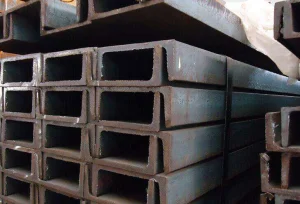
In structural engineering, the Steel Channel Section (commonly categorized into U-channels and C-channels) serves as the primary structural frame for supporting loads, resisting wind forces, and establishing framework stability. As Namibia relies heavily on imported, certified structural steel, global manufacturers and exporters must supply materials that comply with strict international standards (SANS, EN, ASTM, and GB) while withstanding Namibia's unique climatic challenges, which range from hyper-arid desert conditions to highly corrosive marine coastlines.
Selecting the correct steel grade is critical to ensuring the longevity and safety of steel structures in Southern Africa. For structural steel channels, performance is evaluated based on three core parameters: Yield Strength ($R_e$), Tensile Strength ($R_m$), and Impact Energy Resistance.
| Standard Category | Equivalent Grade | Min. Yield Strength (MPa) | Tensile Strength (MPa) | Typical Applications in Namibia |
|---|---|---|---|---|
| EN 10025-2 | S355JR | 355 MPa | 470 - 630 MPa | Heavy mine processing plants, portal frames, marine slipways |
| GB/T 700 / 1591 | Q345 / Q355B | 345 / 355 MPa | 490 - 630 MPa | Wind turbine towers, industrial warehouses, overhead crane gantries |
| JIS G3101 | SS400 | 245 MPa | 400 - 510 MPa | Light structural brackets, storage racks, purlin systems |
| ASTM A529 | Grade 50 / 55 | 345 / 380 MPa | 485 / 520 MPa | Prefabricated modular modular offices, dry-land conveyor structures |
Under the Southern African National Standards (SANS 50025 / EN 10025 equivalent), Grade S355JR is the preferred structural steel for heavy engineering due to its excellent weldability and high mechanical strength. This allows engineers to design lighter structural frames without compromising safety, which is crucial for reducing shipping weight and transport costs from global production hubs to ports like Walvis Bay.
Advanced manufacturing processes designed to deliver maximum load capacity, corrosion protection, and dimensional accuracy.
Available in advanced Hot-Dip Galvanized (HDG) coatings conforming to ISO 1461. Essential for combating marine salinity (C5-M rating) in Walvis Bay, Swakopmund, and Lüderitz.
Manufactured using advanced rolling technology, ensuring precise flange taper, consistent web thickness, and straightness that reduces fabrication time on site.
Every shipment is delivered with certified Mill Test Reports (MTRs) to EN 10204 3.1, confirming structural chemistry, yield strength, and tensile profiles.
Custom and pre-engineered steel profiles suited for specialized mine-shaft construction, industrial cranes, and warehouse systems.
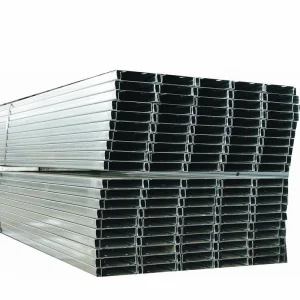
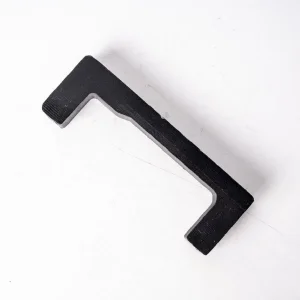
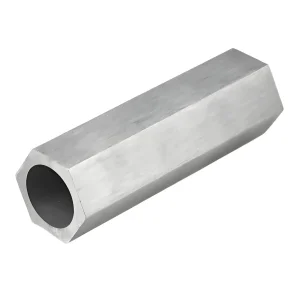
Namibia is one of the world's leading producers of uranium, diamonds, and battery minerals (lithium, lead, and zinc). Heavy infrastructure, such as structural conveyors, sizing stations, and crushers, requires steel channels that can support heavy weight and resist abrasion. Using S355JR parallel flange channels (PFC) ensures that structures remain rigid under severe dynamic loads.
The Port of Walvis Bay is a major trade gateway for the Southern African Development Community (SADC). Structural steel in coastal areas faces rapid deterioration due to salt-laden marine air. Standard mild steel can corrode at a rate of up to 200 $\mu m$/year in marine conditions. To prevent this, we provide hot-dip galvanized C and U channels with zinc coatings exceeding 85 $\mu m$ (610 g/m²), offering maintenance-free service for over 25 years.
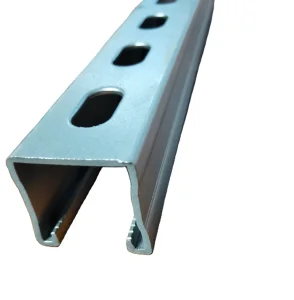
Namibia has some of the highest solar irradiance levels in the world, driving the rapid development of utility-scale solar farms. Galvanized steel C-sections (such as Unistrut profiles and light-gauge C-purlins) are widely used for solar panel mounting structures. These profiles must be lightweight to reduce transport costs and pre-punched for fast, bolt-together installation on-site.
Structural engineers in Namibia are increasingly shifting from old British Standard taper flange channels (RSC) to modern Parallel Flange Channels (PFC). The flat flange surface of a PFC simplifies connection details, eliminating the need for tapered washers. This design choice reduces labor costs during site assembly and minimizes stress concentrations at bolted connections.
Additionally, PFC channels offer improved torsional stiffness and structural efficiency, allowing engineers to design lighter beams with equivalent load-carrying capacity. For large-scale projects like industrial warehouses in the Windhoek industrial zone, this weight reduction can lower total structural material costs by up to 12%.
Dongguan Altimexor Metal Co., Ltd. is a leading steel enterprise that integrates production, supply, sales, and global export. Our comprehensive product portfolio covers stainless steel plate, stainless steel coil, stainless steel strip, stainless steel rod, stainless steel pipe, GI, GL, PPGI, PPGL, corrugated roof panel, and aluminum plate/coil, all customizable to meet specific engineering requirements.
Since our establishment, we have committed to the policy of "credibility first, advanced service, commitment, and customer first." By adhering to our corporate philosophy of "integrity management, mutual benefit, and common development," we aim to deliver high-quality materials, competitive pricing, and reliable service to our global partners.
We work closely with structural engineers, procurement managers, and logistics providers in Namibia. Through our shipping networks operating from Chinese ports directly to the Port of Walvis Bay, we ensure reliable delivery schedules, complete custom clearance documentation, and strict quality control on every batch of structural steel channels.
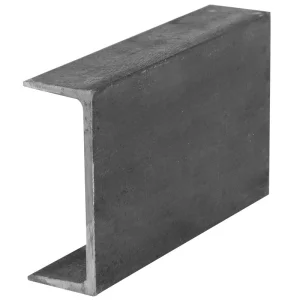
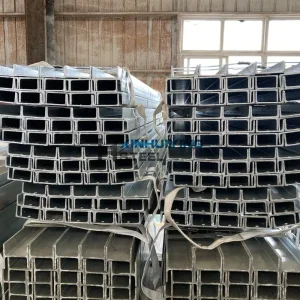
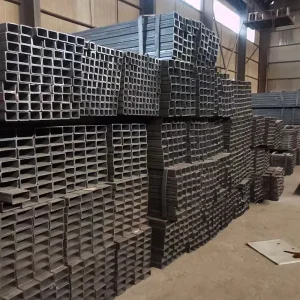
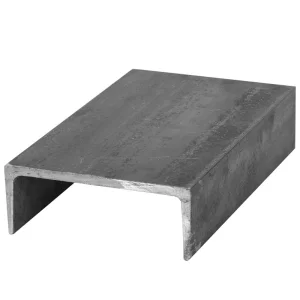
A complete selection of hot-rolled and galvanized steel channel sections designed for Southern African engineering specifications.
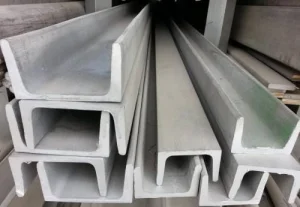
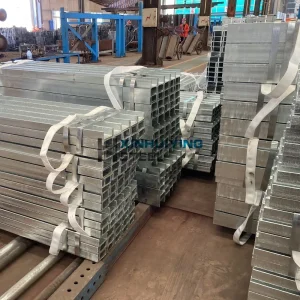
Technical and logistics answers for engineering teams and procurement specialists in Namibia.
The Parallel Flange Channel (PFC) in grade S355JR / Q355B is widely used due to its higher yield strength (355 MPa) and flat flange design. This grade is ideal for structural framework, equipment supports, and heavy conveyor installations in open-cast mines.
Coastal environments like Walvis Bay are classified under high-corrosivity categories (C4 or C5). Standard structural steel must be hot-dip galvanized to ISO 1461 standards (minimum 85 microns zinc coating thickness) or treated with specialized offshore epoxy systems to prevent marine atmospheric corrosion.
Yes. We supply standard 6-meter and 12-meter lengths, and we offer in-house cutting, drilling, and pre-punching services to match your exact construction blueprints. This reduces fabrication labor on-site in Namibia.
All structural steel exports are accompanied by Mill Test Certificates (MTC) conforming to EN 10204 3.1. This ensures traceability and verifies chemical composition (Carbon, Manganese, Silicon) and mechanical performance (Yield, Tensile, Impact testing).
Transit times from Chinese main ports to the Port of Walvis Bay generally range from 28 to 35 days. We coordinate customs documentation, packing, and container loading to minimize logistics delays.
Yes. We supply hot-rolled steel channels for heavy primary structural framing, as well as light-gauge cold-formed C and Z purlins for roofing, wall cladding, and solar tracking arrays.
%20Metal%20Products%20Co.%2C%20Ltd._Steel%20Pipe%2CSteel%20Plate&images=https%253A%252F%252Fomo-oss-image.thefastimg.com%252Fportal-saas%252Fpg2025102019471928898%252Fcms%252Fimage%252F048d5311-fbf7-4e5e-8816-c4626d2ac3bf.png_1920xaf.png&summary=)